


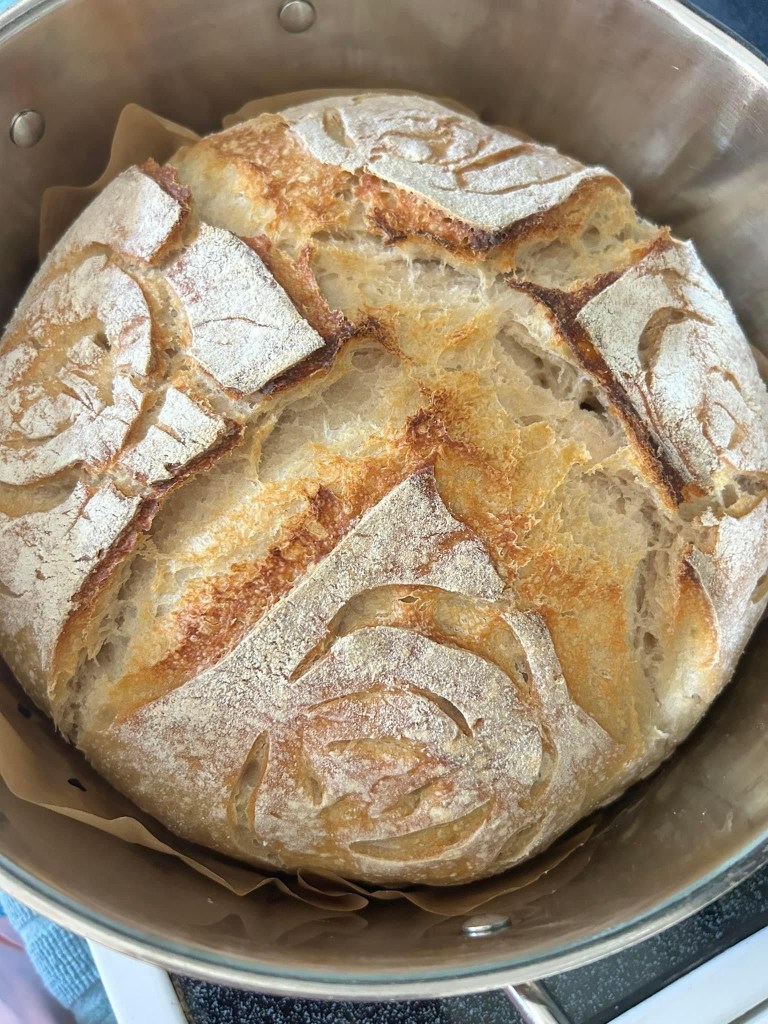
Many folks insist on weighing ingredients and using a scale, but I honestly like the ease of using cups. I have been successful with this, and I believe you can be too!
I embarked on the sourdough journey back in January 2023, and my loaves have evolved with tweaks to the original recipe from the Prairie Homestead blog. I now use the large recipe so we have enough to last us more than 2 days! I also create more structure in the loaf by including a series of stretch and folds. I’ve used this as a base recipe and added inclusions as well.
Here are 2 videos of me making it:
Video of my sourdough process Part 1
Video of my sourdough process Part 2

Easy Sourdough Bread Recipe
Large
1 cup active sourdough starter
2 1/2 cups warm water
6 cups organic AP flour or organic bread flour (or mix of both)
3 Tsp sea salt or pink Himalayan salt
Small
1/2 cup active sourdough starter
1 1/4 cups warm water
3 cups organic AP flour or organic bread flour (or mix of both)
1 1/2 Tsp sea salt or pink Himalayan salt
Combine starter and water followed by flour and salt. Mix into a shaggy dough with a spoon or spatula, and then hands if needed. Let sit covered with a towel or other cover for 30 minutes.
Start a series of 4 stretch and folds/coil folds, 30 minutes apart if possible. You basically want to stretch and pull up the sides of the dough and bring to the middle. Turn the bowl as you work your way around the perimeter of the dough. You will probably do it 5 or 6 times to get around the dough (see videos above). If using any, add inclusions during any stretch and fold. It is probably easiest during the last. 1 cup of inclusions work well. Blueberry Lemon, Jalapeño Cheddar, Cranberry Rosemary, Pumpkin, and Chocolate Chip are all great add-ins!
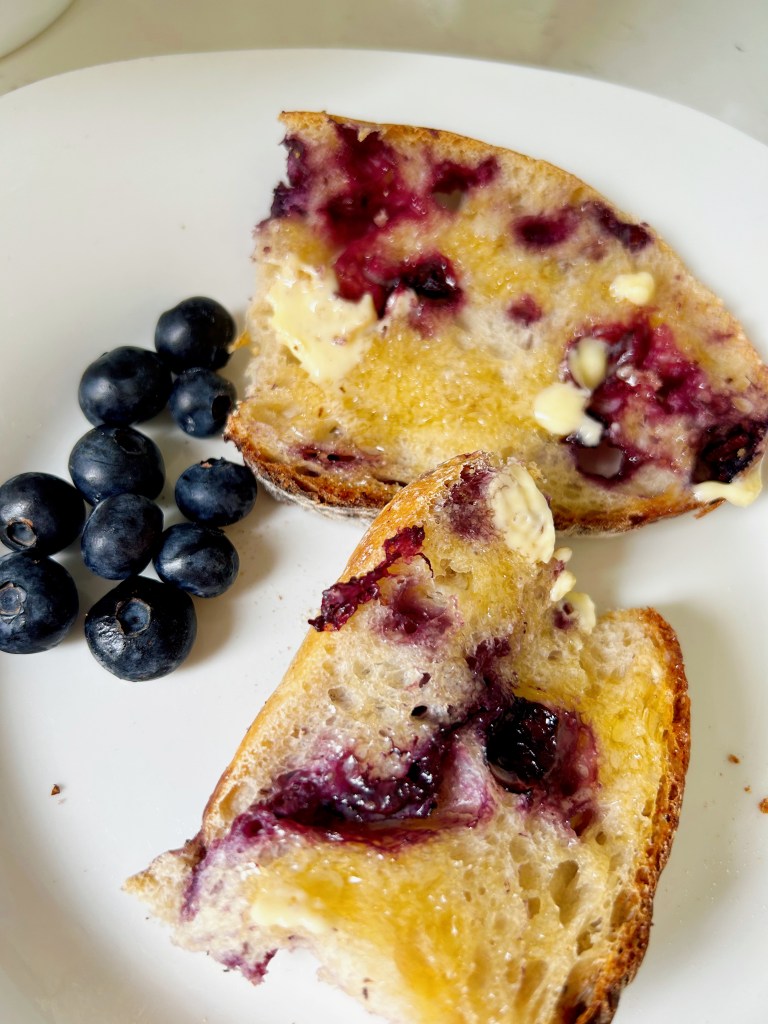
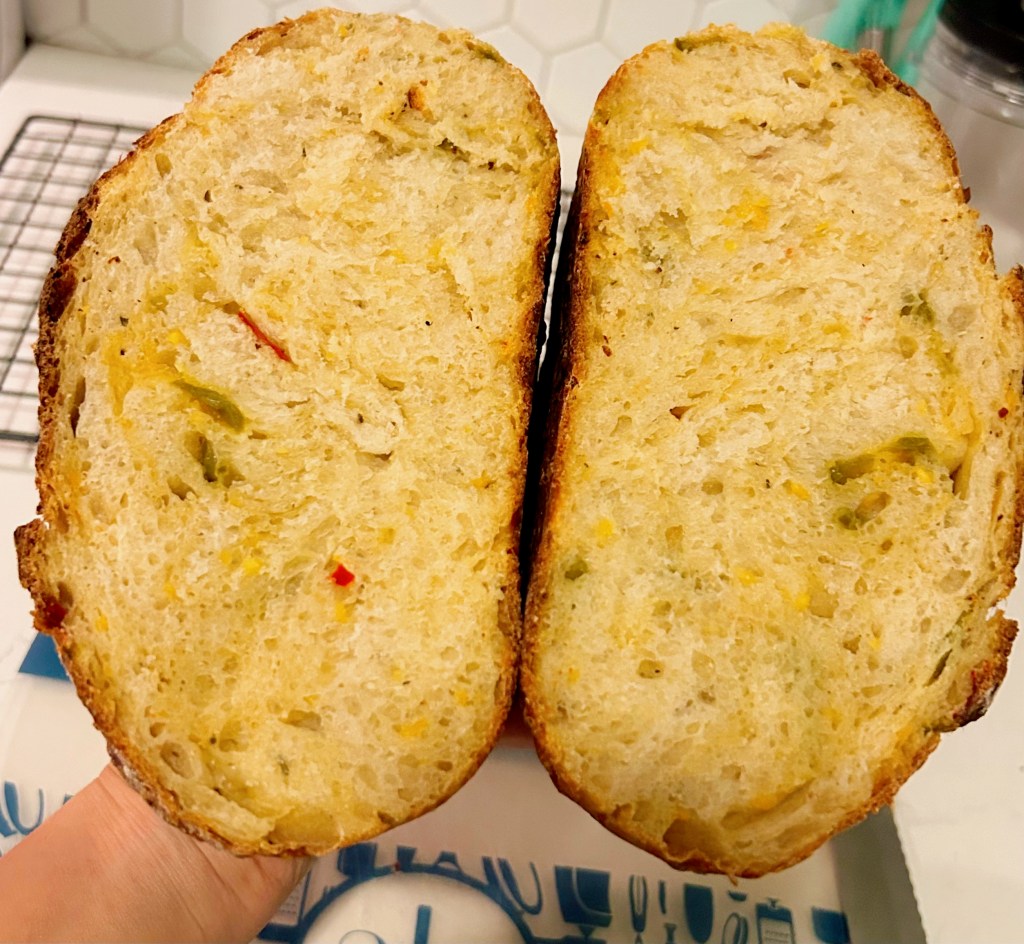

Let it sit to bulk ferment at room temp, under the oven light, or bread proofing setting for 4-6 hours until dough about doubles, or passes the “poke test” That means if you poke it with a floured finger, it springs back slowly and incompletely. If it springs back quickly and completely, it needs more time.

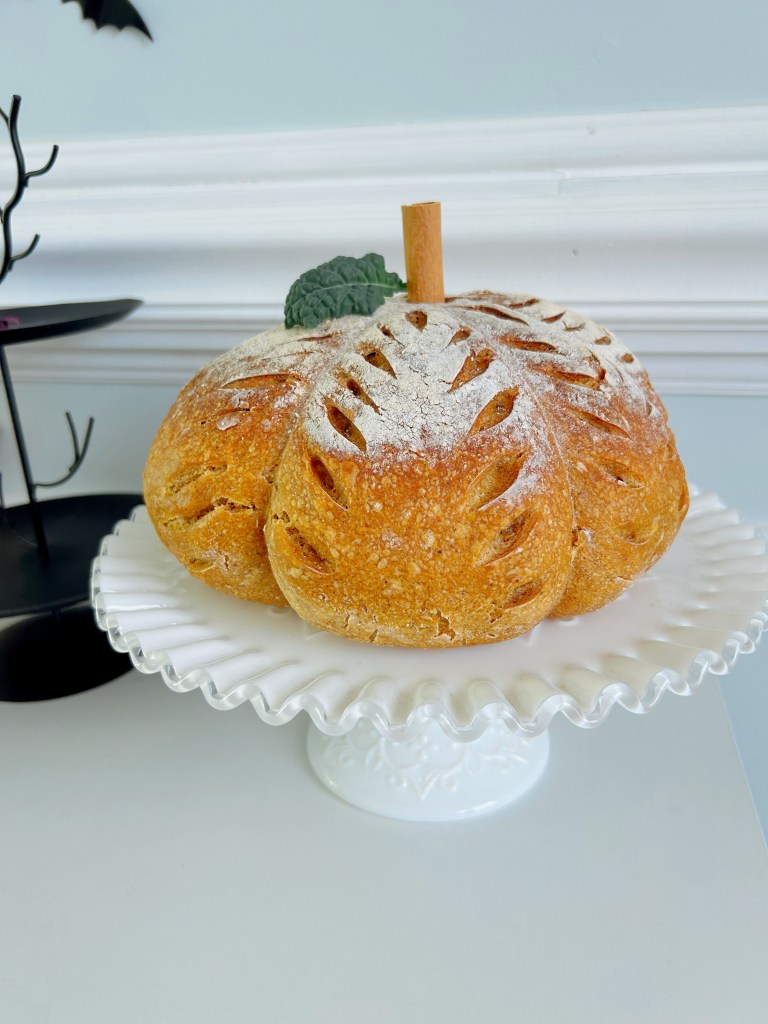
Tip onto counter and gently shape into a ball. Let sit on counter for 15 minutes. Reshape into ball and place into a bowl lined with a floured tea towel/paper towel, or a banneton. Use rice flour to get more of a contrast in color if preferred. If planning on baking right away, let the dough sit for 1-2 hours in the bowl/banneton for a final rest in the fridge.
You may cold ferment this recipe, by popping it in the refrigerator overnight or longer if you like your sourdough more sour. Or skip cold ferment and score and bake right away. Flip gently onto a parchment sheet.
Preheat oven to 450. Lower parchment into your baking vessel. Cast iron Dutch Oven are most common, but I also have had success with a 6-quart stainless steel pan with a lid, and ceramic or glass covered baking dishes. Place a few ice cubes between DO and paper if you would like to create additional steam ( however, this may fade your flour if you are wanting a sharp contrast). For large loaf, bake covered 40 minutes, and uncovered for 10 until golden and 210 degrees. For small loaf, bake 30 minutes covered, and 10 minutes covered and 210 degrees.
If open baking on a sheet pan or pizza stone, you can create a steam bath below the rack with another sheet pan of water. Alternatively, some like to use 100% cotton towels rolled up and placed in a a water-filled cast iron or stainless pan during the preheating of the oven. Let water come to a rolling boil. Place parchment paper on a sheet pan above the steam bath. Bake at 450 for 50 minutes.
If you try this recipe, please let me know how it works out for you! 🧡🩵🧡
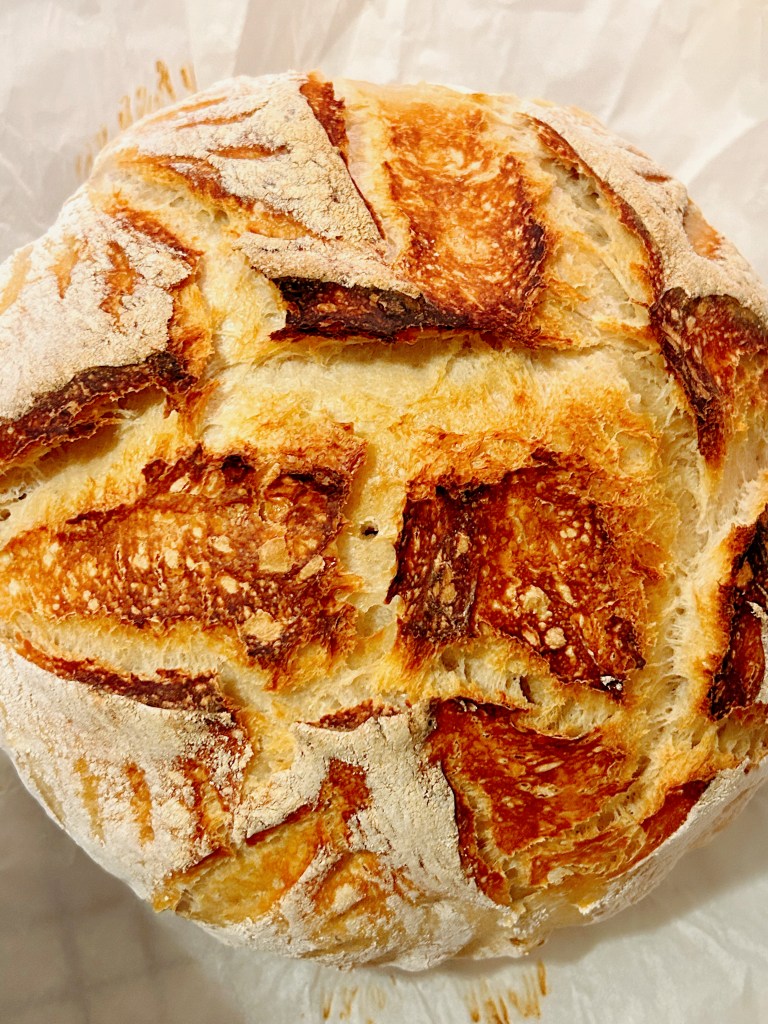


Buon Apettito,
Fresh Foodie Mama ~ Sara~
Adapted from this original recipe at The Prairie Homestead.

 Fresh Foodie Mama